comprehensive engineered solutions
Custom Food Safe Processing Conveyors
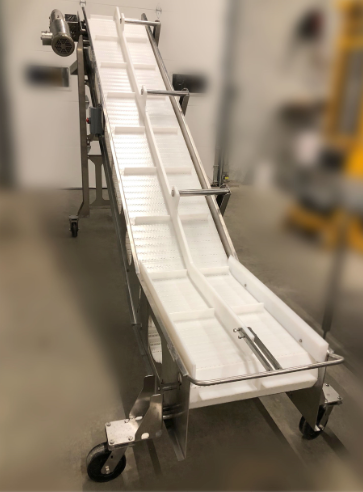
Tabletop Conveyor systems
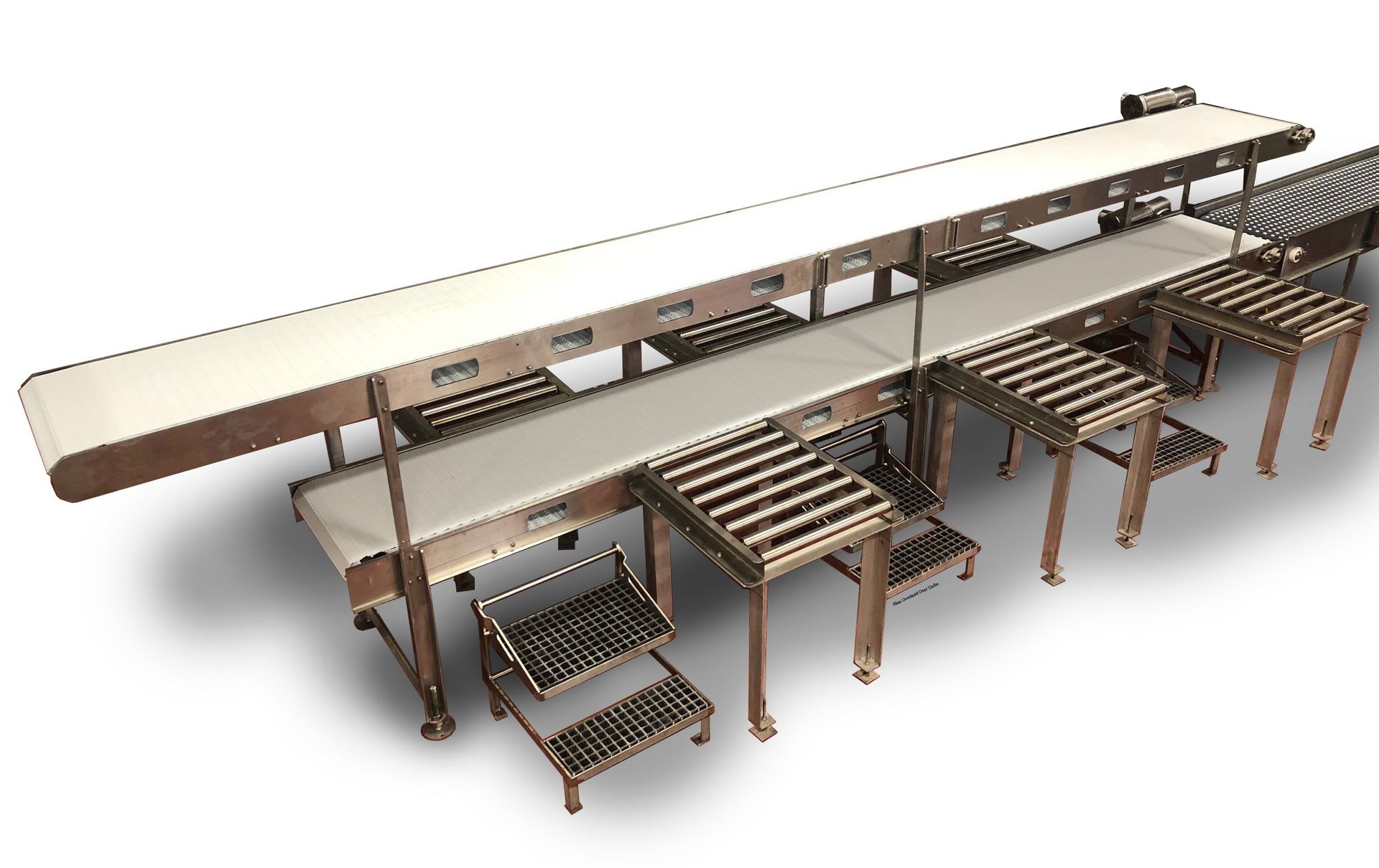
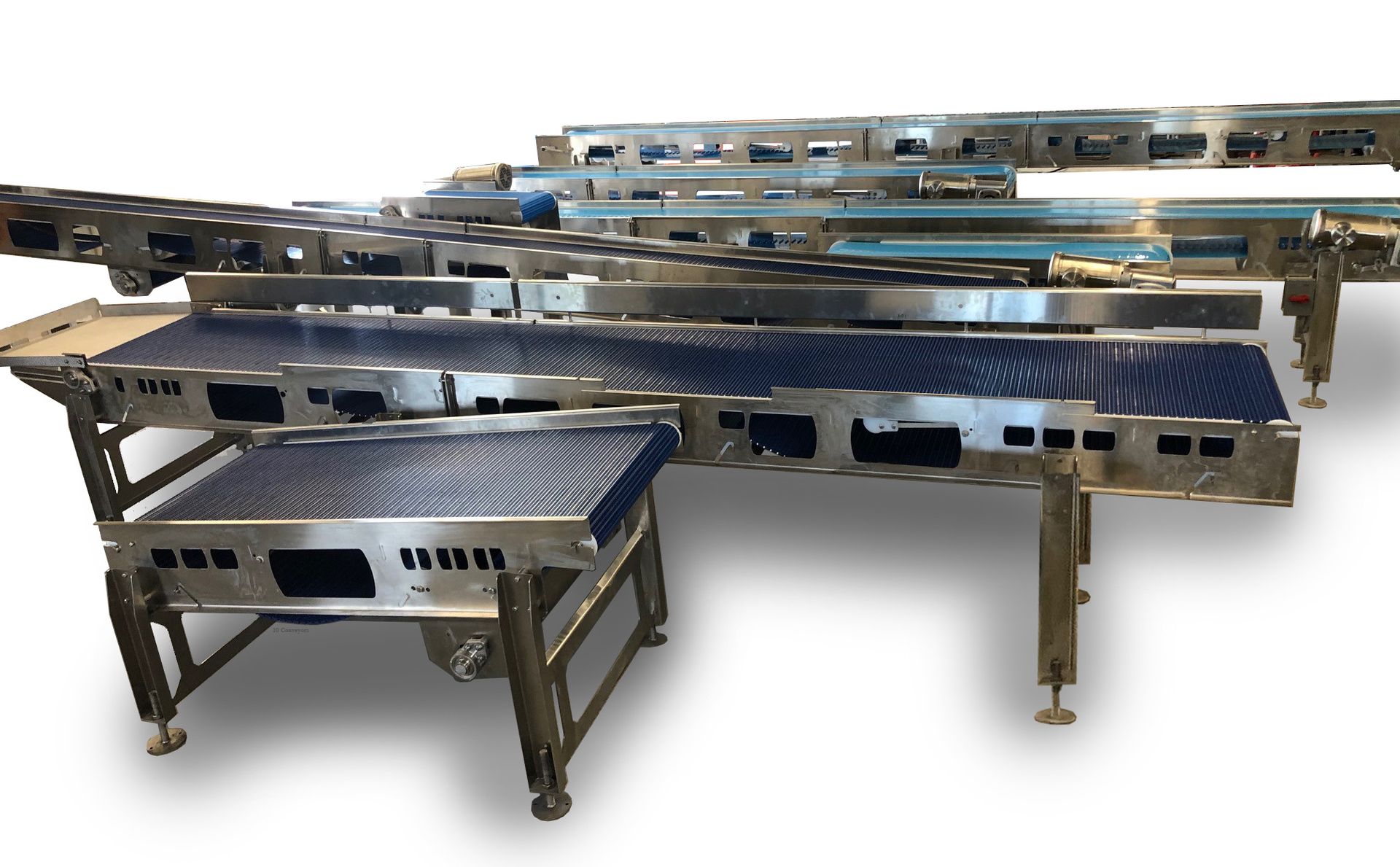
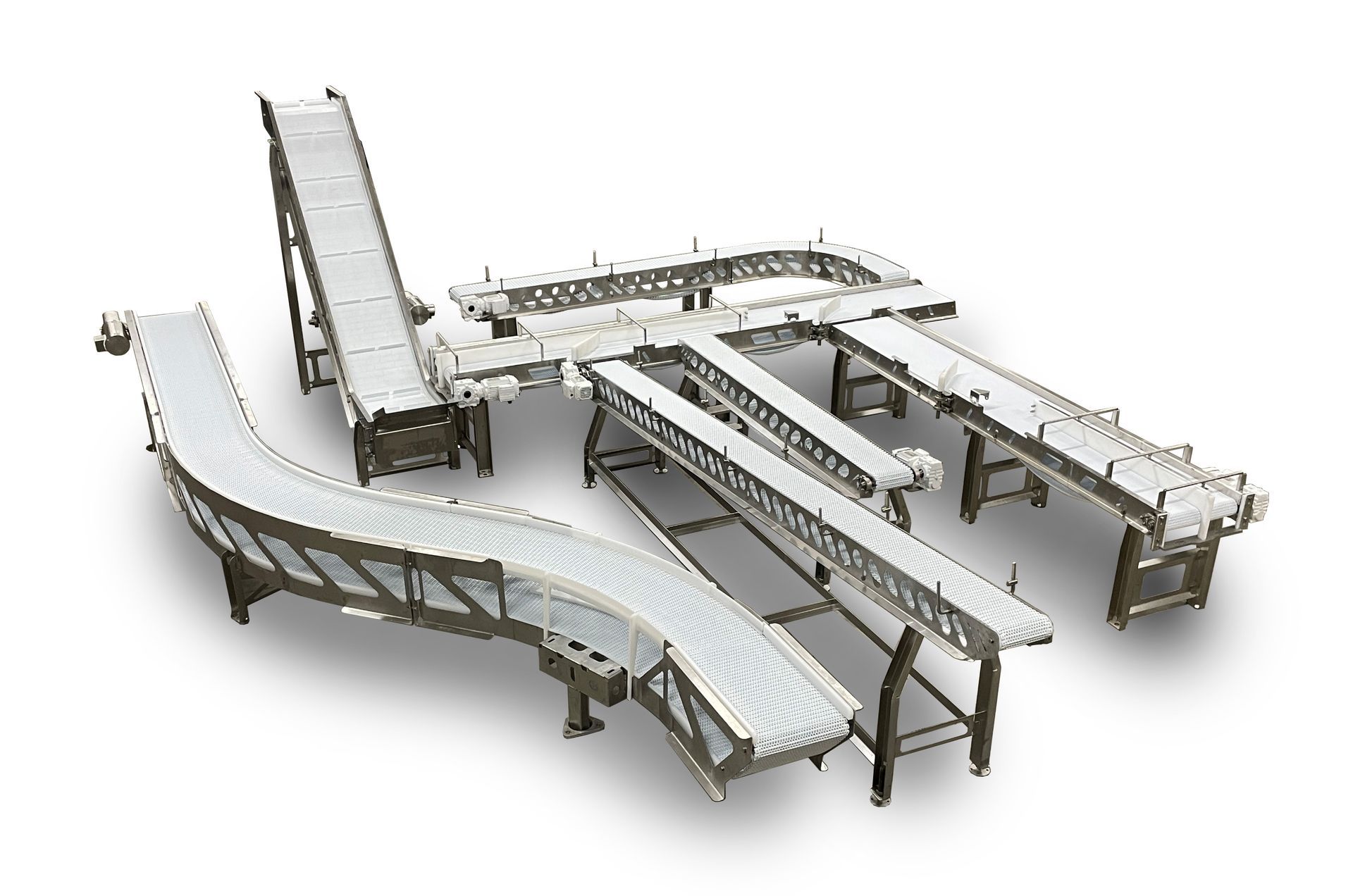
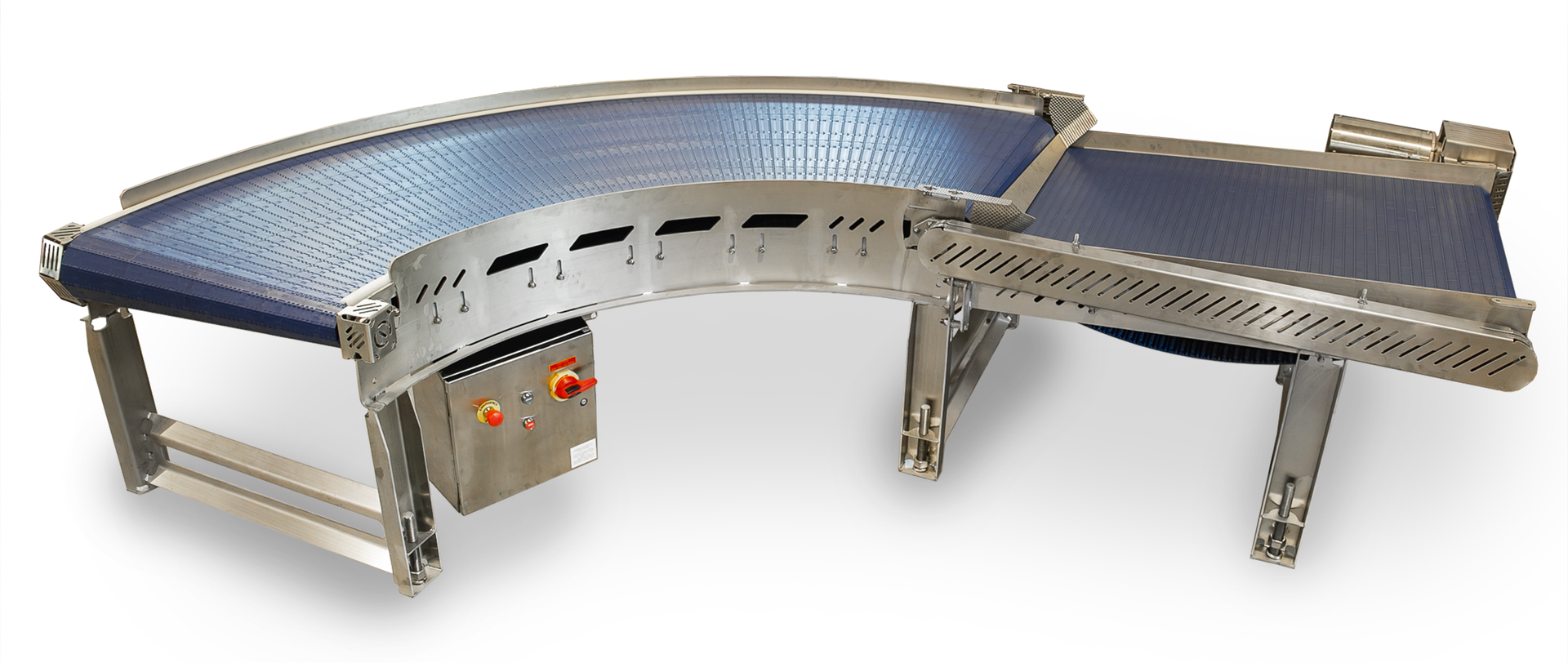
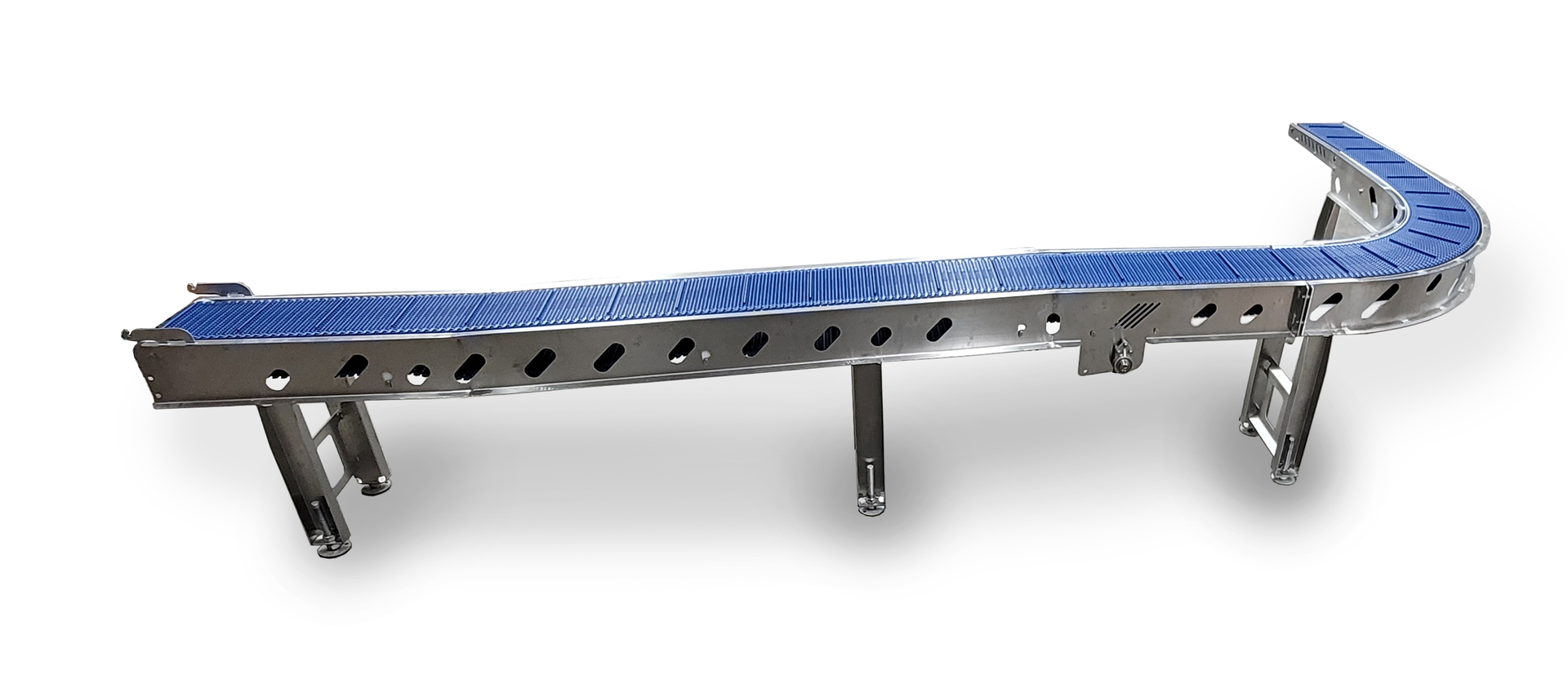
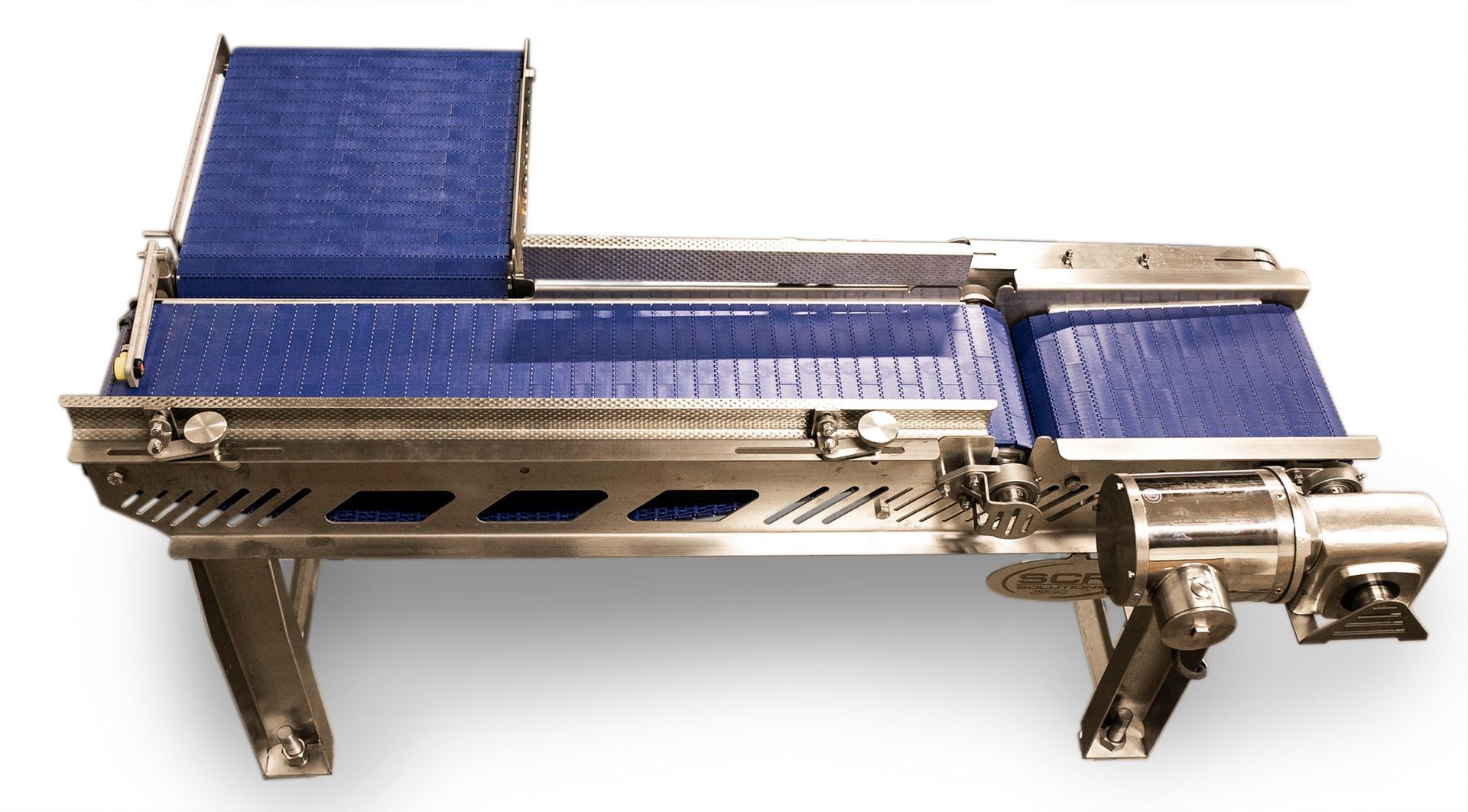
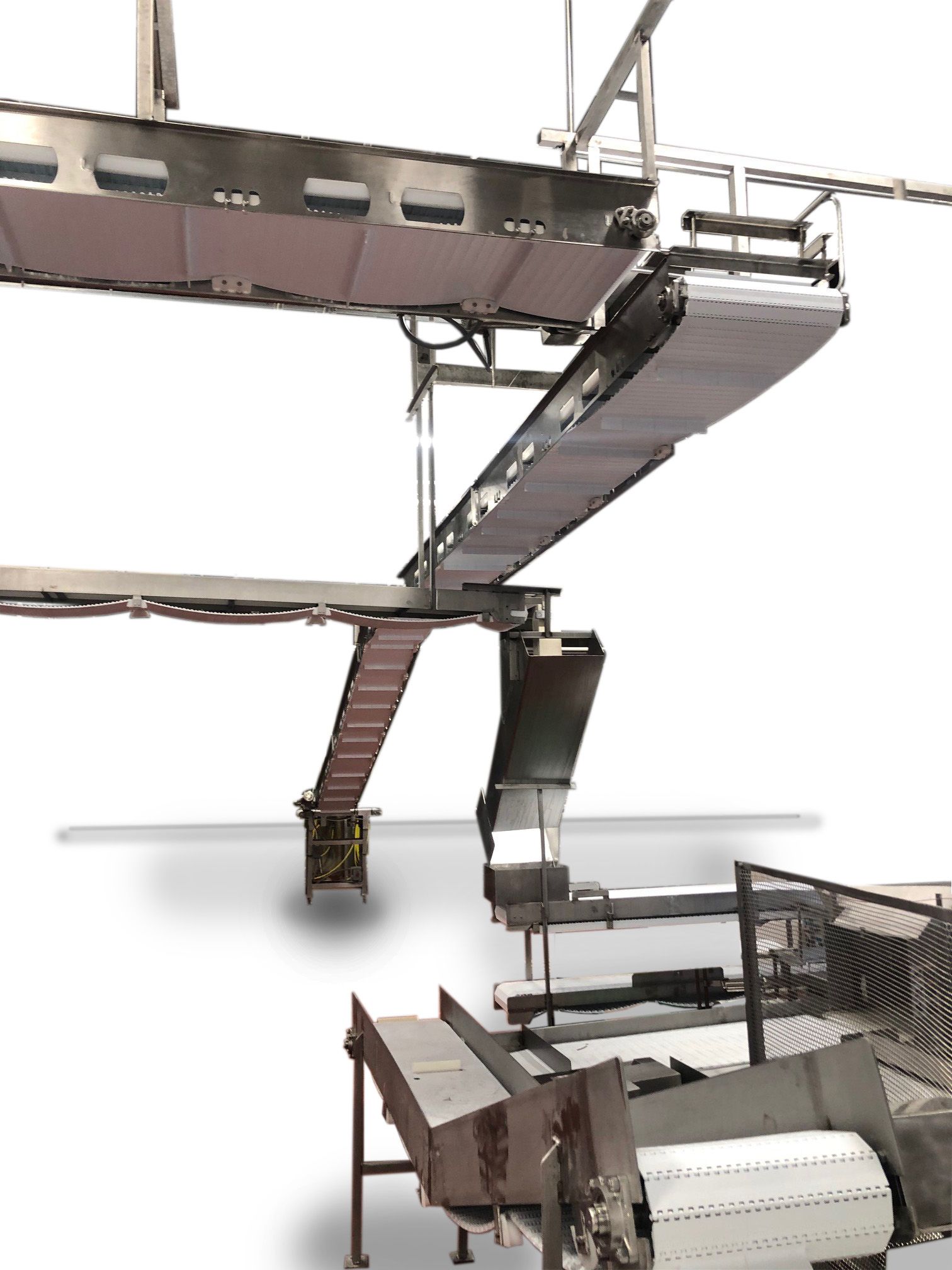
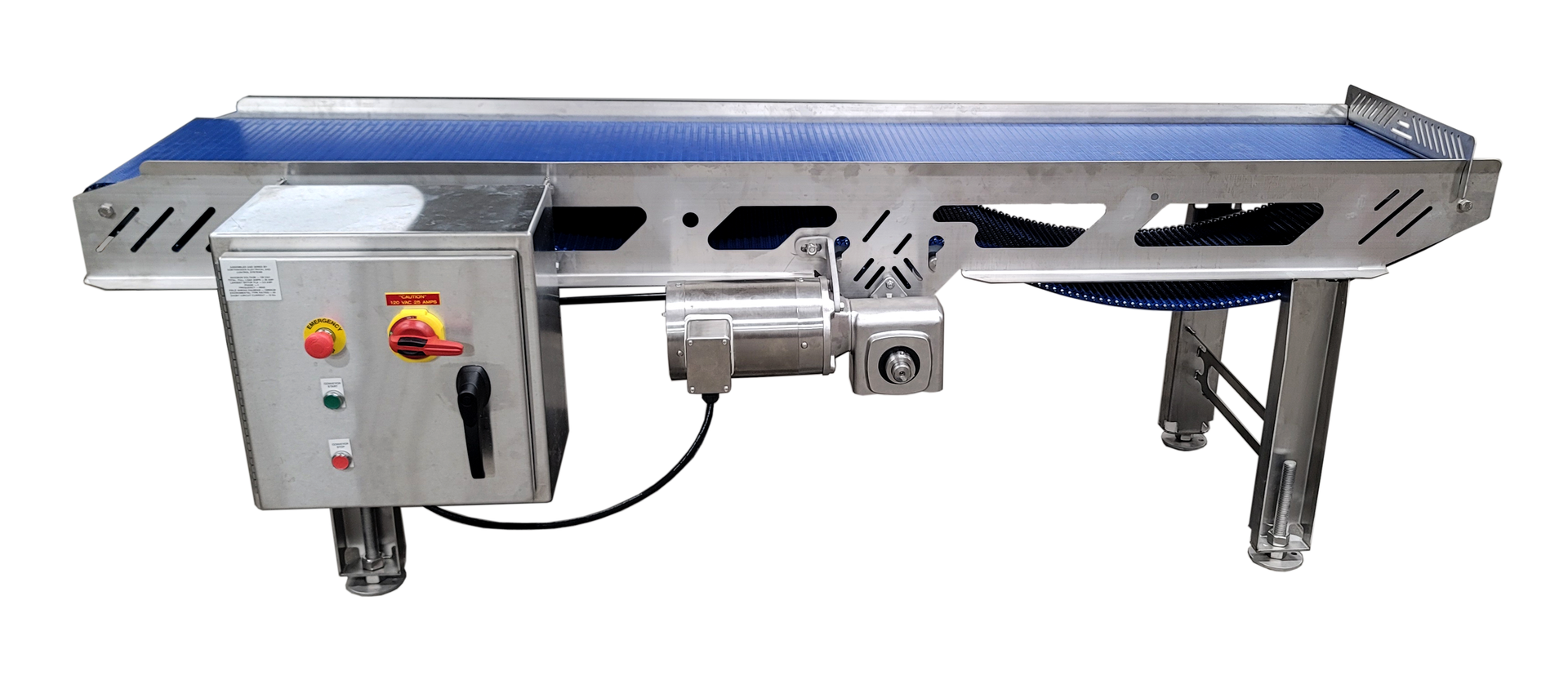
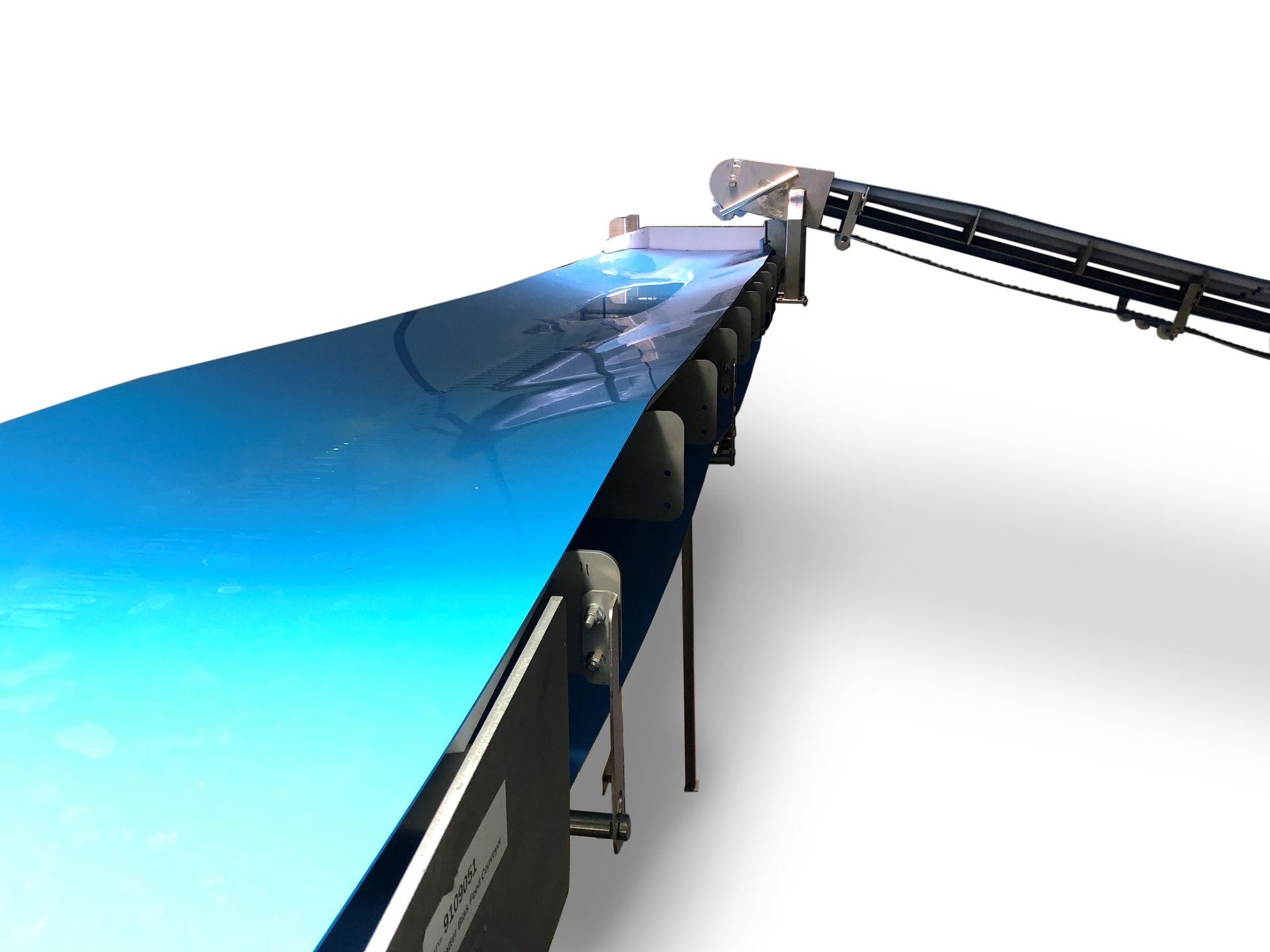
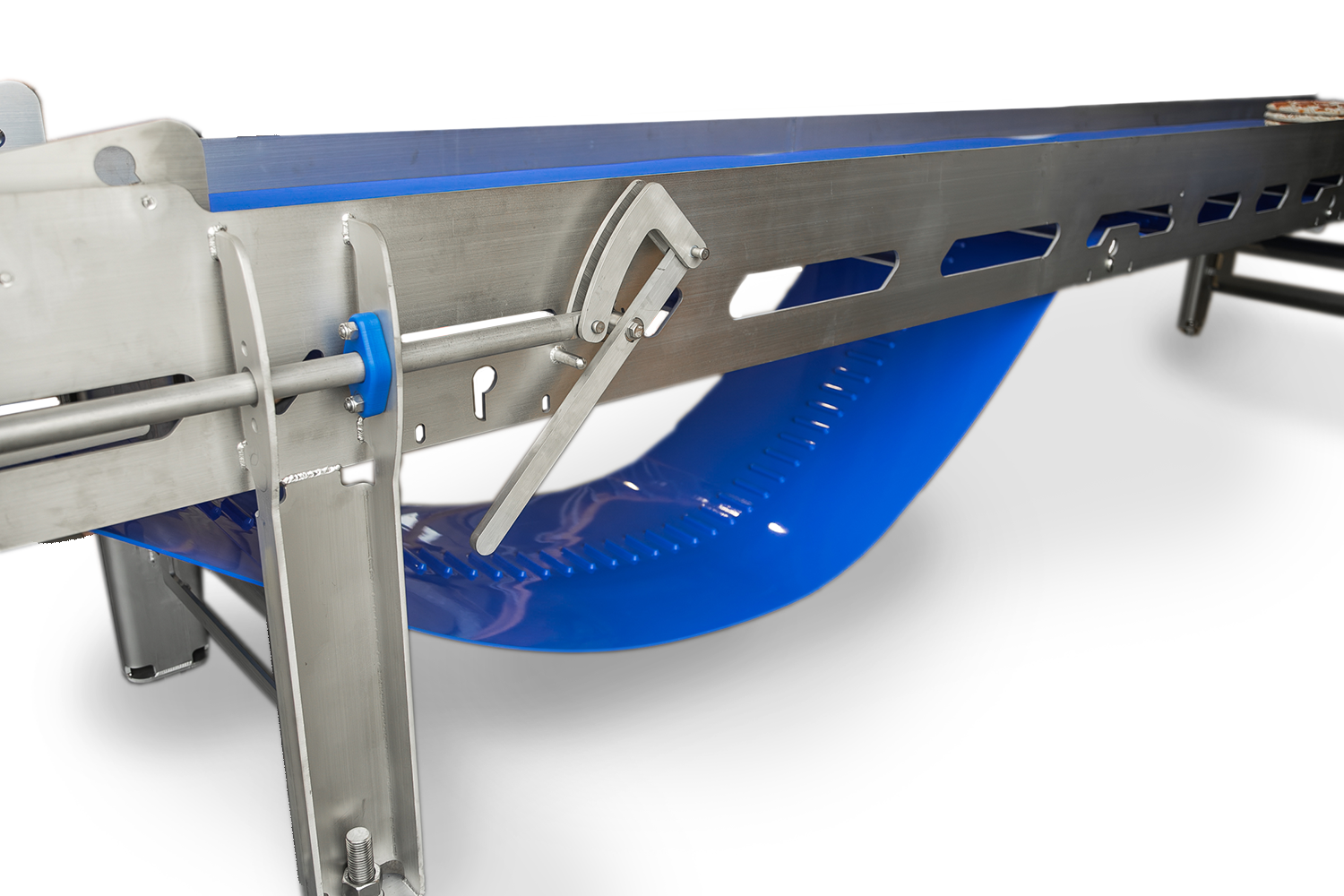
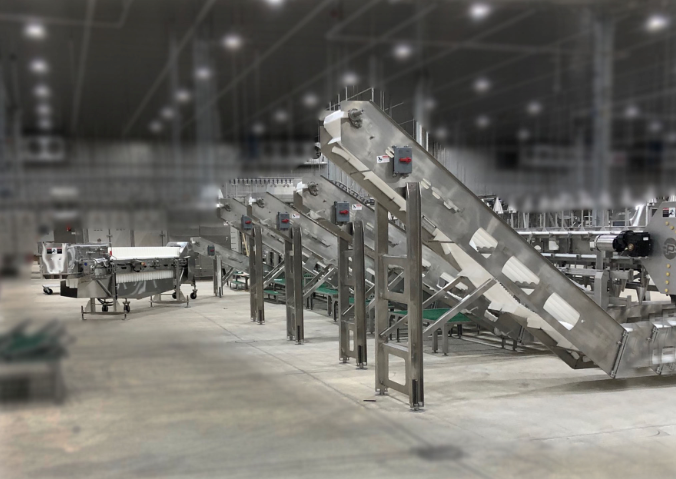
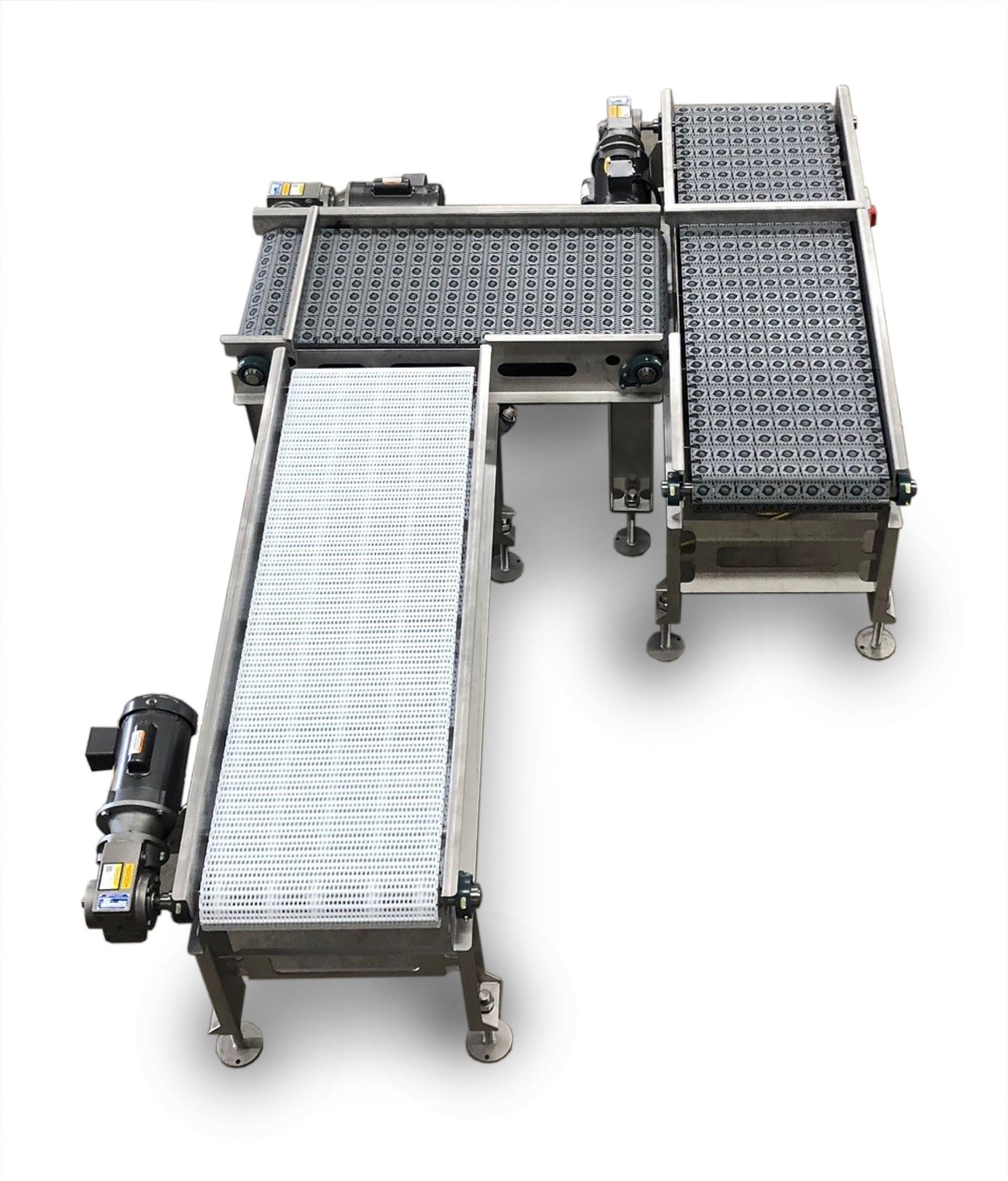
SCRs food processing conveyor systems and custom tabletop conveyors are designed on the premise of both people safety and food safety. With a focus on operational ease, we incorporate strategically placed sidewall cutouts for easy cleaning and maintenance access, while ensuring compliance with food safety regulations.
At a glance: Tabletop Conveyors
| Technology | Reliability |
|---|---|
| Scale or metal detector integration | Stainless steel drive components and bearings |
| Premium belting | Non-hollow design with continuous non-porous welds |
| VFD or servo driven for precision motion control | Full washdown ready |
| Controls to support divert, reject, traffic copping | Gearbox and bearing guard package |
Auger/ScreW Conveyor Systems
Our custom Screw/ auger conveyors are designed to handle various food processing needs with precision and efficiency. These conveyors are ideal for moving bulk materials smoothly and consistently, ensuring optimal flow and reducing downtime.
At a glance: Auger/Screw Conveyors
| Technology | Reliability |
|---|---|
| Load Cell and hoppers incorporated | Fully welded and polished or stitch welded flights |
| Augers form 4" to 18" diameter | Hanger bearing free to 30 feet length |
| Full encapsulated or hinged covers | Wear strips or shaped trough |
| Ceiling hung or leg mounted | Stainless Steel drive components and bearings |
KEY FEATURES
Versatile Auger Sizes
Available in diameters ranging from 4” to 18”, accommodating different volume requirements.
Robust Construction
Fully welded and polished flights ensure durability and hygiene, while stitch welding is available for less demanding applications.
Flexible Installation
Can be ceiling hung or leg mounted to fit your facility's layout.
Innovative Design
Incorporates load cells and hoppers for precise weight measurement and material control.
Maintenance-Friendly
Hanger bearing free up to 30 feet in length, reducing maintenance needs and increasing operational uptime.
Custom Covers
Choose from fully encapsulated or hinged covers for added protection and easy access.
Enhanced Durability
Wear strips or shaped troughs extend the lifespan of the conveyor.
High-Quality Components
Stainless steel drive components and bearings for reliability and long service life.
Additional Options
Slide gates and center hung bearing free designs available for specialized applications.
Vibratory Conveyor Systems
Our vibratory conveyors are engineered to move products efficiently while minimizing damage and maintaining product integrity. Perfect for delicate and precise applications in the food processing industry.
At a glance: Vibratory Conveyors
| Technology | Reliability |
|---|---|
| Optimal product handling: reduce loss and/or degradation of product | Low maintenance and designed for sanitation |
| Improved handling for spreading, screening, and laning | Versatile installation options |
| Ideal for scale feeding, product settling, or de-watering | Low cost of operation |
KEY FEATURES
Damage-Free Product Handling
Gentle vibration ensures minimal product breakage and optimal flow.
Quality Components
Stainless steel drive components and bearings ensure reliability.
Flexible Mounting
Options for ceiling hung or leg-mounted installations.
Durable Build
Fully welded and polished or stitch welded flights, tailored to your specific needs.
Multi-Stage Vibratory Conveyor
Vibratory settling can help get 10 lbs of material in a 5 lb bag or container. From belting shakers for alignment, topping settling or troughing shaker conveyors for gentle product handling with no yield loss, vibration may be just the solution.
At a glance: Multi-Stage Vibratory Conveyors
| Technology | Reliability |
|---|---|
| Sanitary vibrators are highly hygienic | Integrates to counters, positioning & packing |
| Reduces product damage and yield loss | UL controls and components |
| Motion control at start/stop/fill/settle level | Stainless steel drive and bearings |
| Integrates to scaling, filling, settling | Proven, robust components |
| Gain filling process efficiencies |
Drag Chain Conveyors
Our drag chain conveyors are designed for heavy-duty applications, providing reliable and efficient material transport in food processing environments. With specialized designs for specific processing needs, these conveyors ensure seamless operation and high performance.
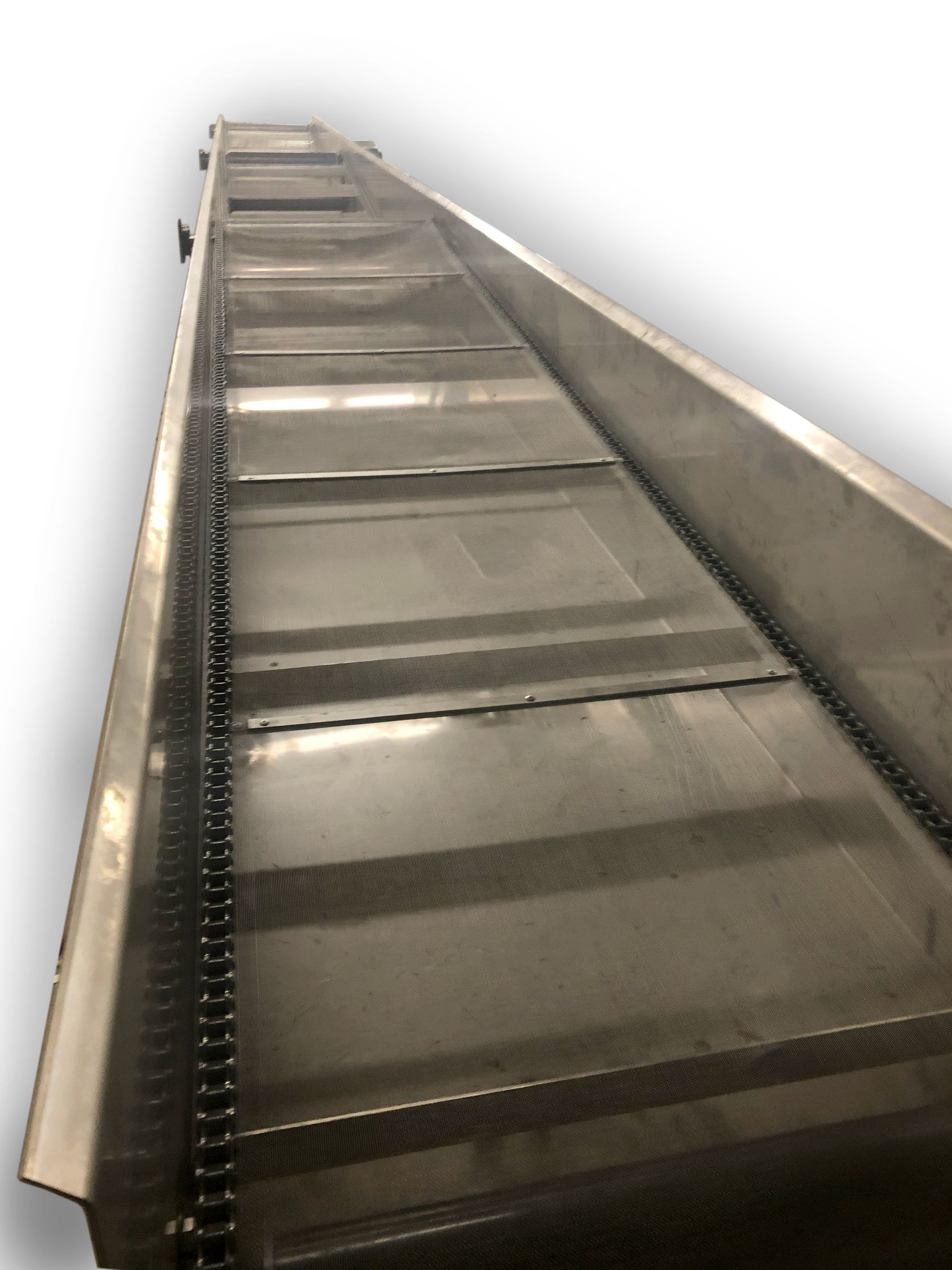
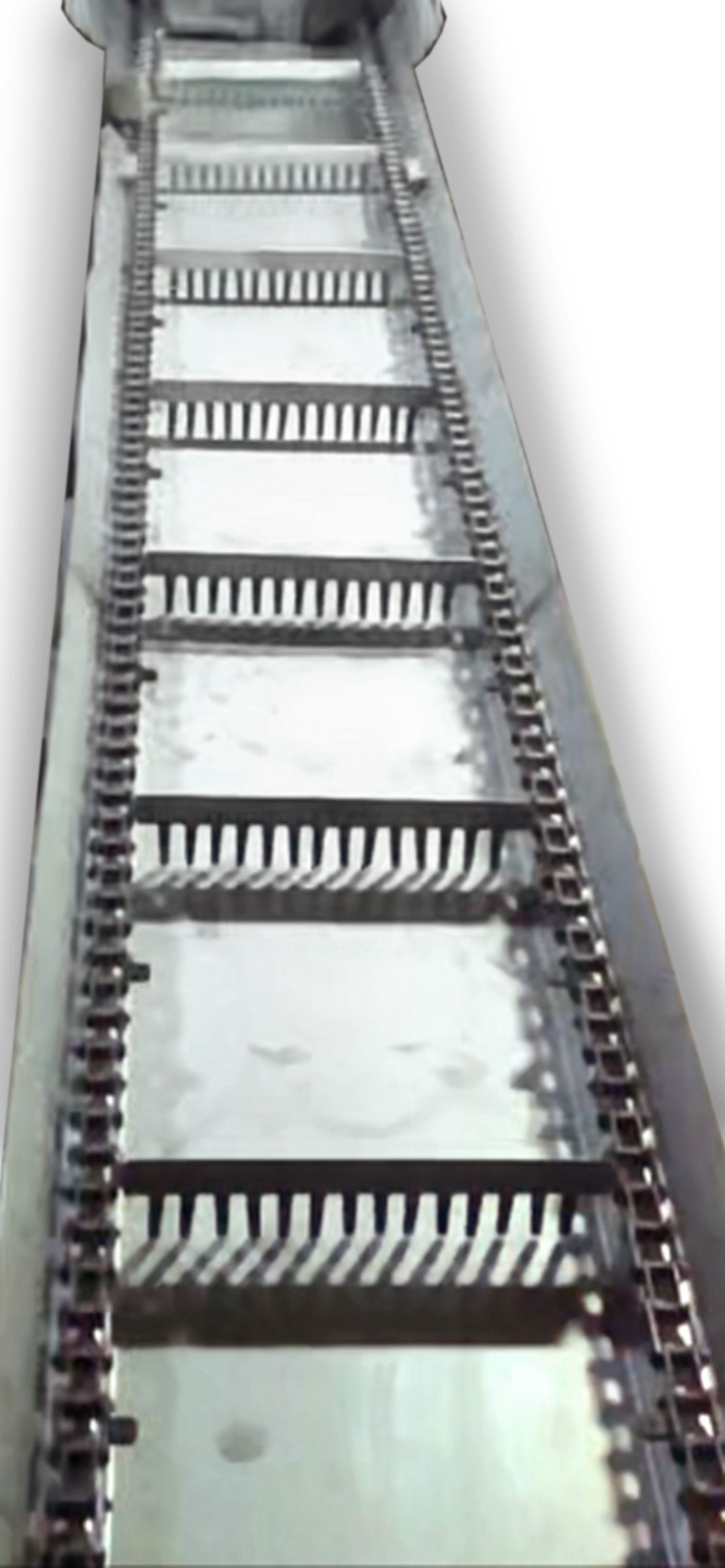
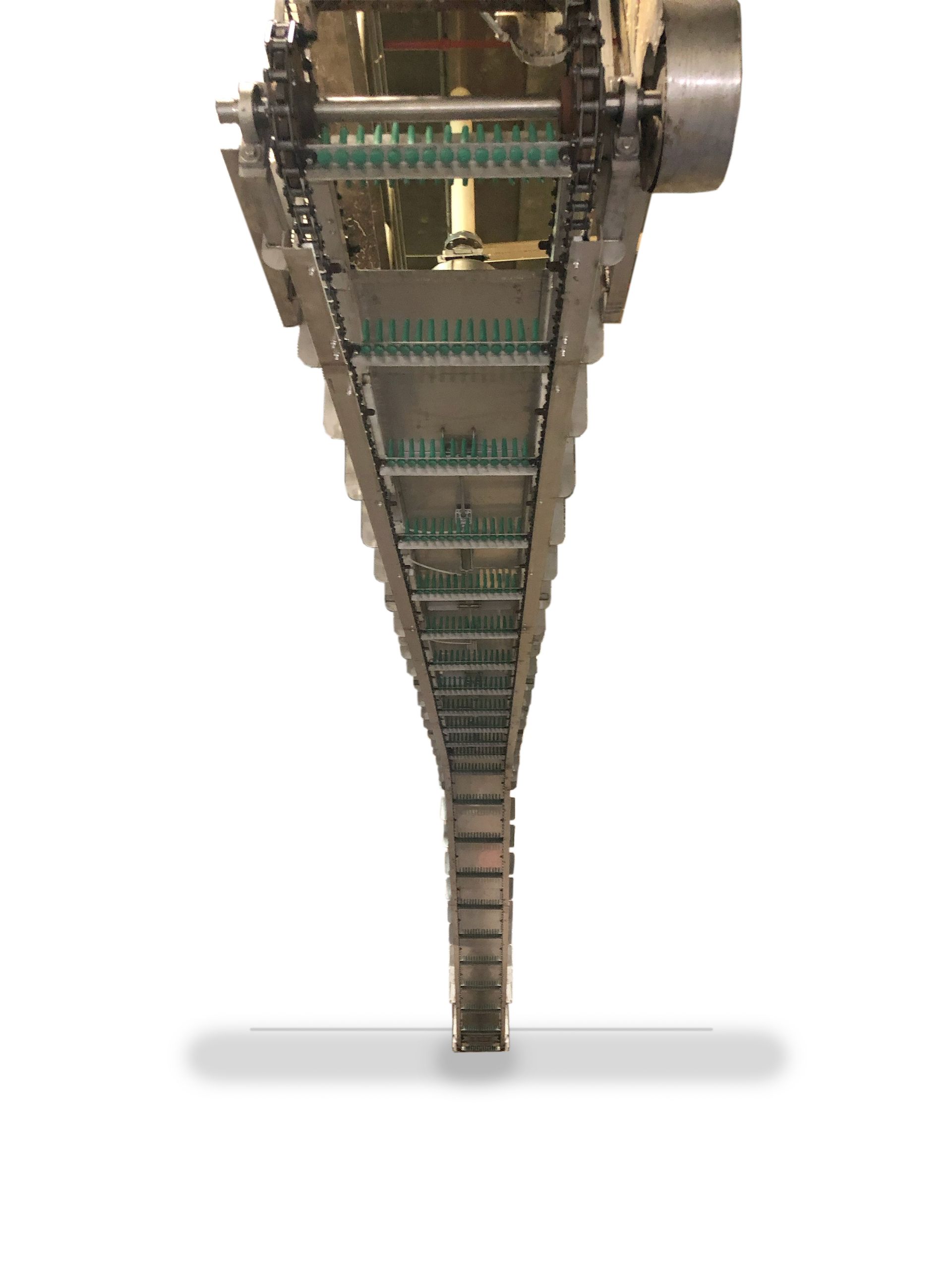
At a glance: Drag Chain Conveyors
| Technology | Reliability |
|---|---|
| Multiple bottom discharge points | Versatile installation options |
| Steep incline handling | Fully welded and polished |
| Performs well with wide range of product sizes | Double roller chains provide a robust structure |
KEY FEATURES
Heavy-Duty Performance
Suitable for transporting bulk materials with ease.
Precision Control
Incorporates load cells and hoppers for accurate material handling.
Protection and Durability
Wear strips or shaped troughs enhance conveyor longevity.
Versatile Installation
Ceiling hung or leg-mounted options to fit your facility’s needs.
Sturdy Construction
Fully welded and polished or stitch welded flights for durability.
Reliable Components
Stainless steel drive components and bearings ensure long-term performance.
Specialized Designs:
Feather Drag
Optimized for light, fluffy materials ensuring gentle handling and transport.
Pit Drag
Designed for below-ground installations, perfect for handling materials from pit areas.
Top Water Skimmers
Ideal for removing floating debris and contaminants from water surfaces, ensuring clean and efficient processing.
TRIM LINE AND DEBONING SYSTEM
This stainless steel full washdown protein trim line conveyor system delivers a fully integrated solution that combines hygienic design, operator ergonomics, and modular flexibility to maximize throughput while minimizing downtime and labor strain.
At a glance: Trim Line and Deboning System
| Technology | Reliability |
|---|---|
| Full washdown, hygienic design, IP69K | Optimized reach zones enhance efficiency |
| Sloped surfaces and open-frame design | Built-in adjustable height workstations |
| Designed for scalability and reconfiguration | CIP or manual sanitation options |
| Built-in trim chutes and collection bins | Product and waste streams separated |
| Compatible with high-pressure and high-temp |
Frequently Asked Questions
Food Processing Conveyor Systems
When should we replace an existing food processing conveyor instead of modifying it?
That decision depends on what is limiting your current system. Capacity, sanitation, maintenance requirements, product handling, equipment condition, and changes elsewhere on the line can all influence whether modification or replacement makes more sense. We evaluate your existing food processing conveyor and the surrounding process to help determine the most practical path forward.
Can SCR design food processing conveyor equipment for a tight or challenging facility layout?
Yes. Existing plants rarely provide unlimited space for new equipment. We can engineer food processing conveyor equipment around available floor space, elevations, surrounding equipment, operator access, and sanitation needs. Our capabilities include horizontal, incline, decline, curved, spiral, Z-frame, radius, and other configurations that give us flexibility when working within an existing operation.
How do I know which type of food processing conveyor is right for my operation?
The right food processing conveyor depends on what you're moving, where it needs to go, and what needs to happen along the way. Product characteristics, throughput, elevation changes, sanitation requirements, available space, and upstream and downstream equipment all influence the design. We evaluate the complete application to determine which conveyor type and configuration best support your process.
Can a food processing conveyor system solve bottlenecks elsewhere on my production line?
Yes. A conveyor affects more than product transportation. The right food processing conveyor system can help manage product timing and accumulation, improve transfers between equipment, reduce unnecessary handling, and maintain more consistent product flow. We look at how the conveyor interacts with the rest of your line so we're solving the process challenge, not simply adding conveyance.
How does SCR design food processing conveyor systems for food safety and sanitation?
Food safety and sanitation are considered throughout our engineering process. Depending on the application, our food processing conveyor systems can incorporate features such as non-hollow construction, continuous non-porous welds, washdown-ready designs, stainless steel components, and improved access for cleaning, inspection, and maintenance.
How does SCR account for employee safety when designing food processing conveyors?
People safety is part of how we evaluate the entire conveyor application. We consider how employees operate, clean, inspect, and maintain the equipment, along with product flow and equipment access. The goal is to engineer food processing conveyors that support the production process without creating unnecessary challenges for the people working around them.
Table Top Conveyors
When is a table top conveyor a good fit for a food processing line?
Table top conveyors are a strong option when your operation requires controlled product movement between processing, inspection, and packaging equipment. SCR can integrate scales, metal detectors, diverting, rejecting, traffic management, and motion controls to help maintain product flow and keep upstream and downstream processes working together efficiently.
Can a table top conveyor help manage product traffic between different pieces of equipment?
Yes. A table top conveyor can do more than transport product from one point to another. SCR can integrate scales, metal detectors, diverting, rejecting, traffic management, and VFD or servo-driven motion control into the system, allowing the conveyor to become an integrated part of your processing or packaging operation.
What sanitation features can be built into table top conveyor systems?
Our table top conveyor systems can incorporate strategically placed sidewall cutouts for cleaning and maintenance access, non-hollow construction, continuous non-porous welds, stainless steel drive components and bearings, and washdown-ready designs. We engineer these details into the conveyor rather than treating cleanability as an afterthought.
Auger Conveyors and Screw Auger Systems
When should I consider an auger conveyor for my food processing operation?
An auger conveyor is an option when your process requires controlled movement of bulk material between production steps. We engineer the auger around your product, required capacity, transfer points, available space, and processing requirements, with options including hoppers, slide gates, load cells, covers, and different mounting configurations.
How can a screw auger simplify operation and maintenance?
Depending on the application, SCR can engineer a screw auger without hanger bearings for lengths up to 30 feet, reducing internal maintenance points. Stainless steel drive components and bearings, wear strips or shaped troughs, and fully welded and polished flights can also be incorporated based on the demands of your operation.
What information does SCR need to engineer an auger conveyor for our application?
Product characteristics, required throughput, transfer points, available space, elevation changes, and how the material enters and exits the conveyor all help determine the appropriate design. From there, we can configure an auger conveyor with the diameter, mounting arrangement, hoppers, gates, covers, load cells, and other features required for the application.
Can a screw auger handle long conveying distances without hanger bearings?
Depending on the application, SCR can engineer a screw auger without hanger bearings for lengths up to 30 feet. Eliminating these internal maintenance points can simplify the system while supporting reliable material movement. We evaluate the product, conveyor length, and operating requirements to determine whether this configuration is appropriate.
Vibratory Conveyors
What food processing applications are vibratory conveyors best suited for?
Vibratory conveyors are particularly useful when product needs to be moved while also being spread, screened, laned, settled, or dewatered. They can also integrate with scaling, filling, counting, positioning, and packaging processes, making them useful when controlled product presentation is important to the next step in production.
How can a vibratory conveyor help protect product quality and improve production efficiency?
A vibratory conveyor uses controlled vibration to move and manipulate product while helping minimize product damage and yield loss. We engineer the system around both the characteristics of your product and the downstream process, helping create consistent product flow without introducing unnecessary handling.
Can a vibratory conveyor perform more than one process while moving product?
Yes. A vibratory conveyor can be engineered to move product while also spreading, screening, laning, settling, or dewatering it. We can also integrate vibratory systems with scaling, filling, counting, positioning, and packaging processes, allowing the conveyor to perform useful process functions rather than simply transferring product.
How does SCR handle products that are difficult to convey without damaging them?
When maintaining product integrity is a priority, vibratory conveyors can provide controlled product movement while helping minimize damage and yield loss. We engineer the system around the characteristics of the product and what needs to happen during conveyance, including spreading, settling, positioning, or feeding downstream equipment.
Drag Chain Conveyors
When is a drag chain conveyor the right choice for a food processing facility?
A drag chain conveyor can be a strong fit for demanding material handling applications, including processes that require steep inclines, multiple bottom discharge points, or movement of materials with different characteristics. SCR also offers specialized configurations for light, fluffy materials, below-ground handling, and top water skimming.
How can drag chain conveyors improve material flow within a facility?
Drag chain conveyors can be engineered around how and where material needs to move, including challenging elevations and multiple discharge locations. Options such as hoppers, load cells, wear strips, shaped troughs, and ceiling-hung or leg-mounted configurations allow us to build the conveyor around your process and facility rather than forcing your process around the conveyor
Reach Out to Us →
Our custom conveyors are built to meet the rigorous demands of the food processing industry, ensuring reliable, efficient, and hygienic material handling. Contact us today to learn more about how our custom conveyor solutions can optimize your processing operations.